
Molecular Diagnostics
A medical device innovator developing next-generation molecular diagnostics set out to radically compress a traditionally slow, multi-step laboratory workflow.
Advanced Interface Design Speeds Innovation in Molecular Diagnostics
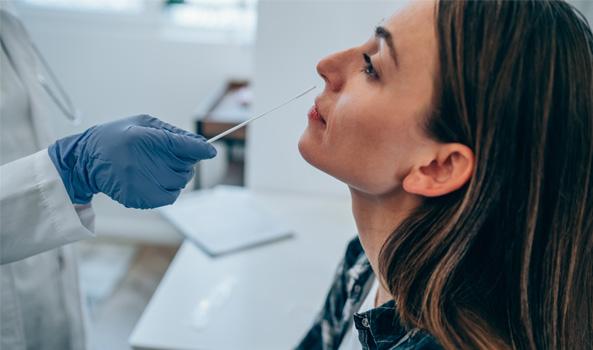
The medtech company created a system that transformed complex DNA and RNA extraction — from blood, saliva, and even challenging samples containing fungi, bacteria, or viruses — into a streamlined process completed in under two minutes. What once required extensive lab time and resources could now be performed rapidly and reliably at the point of need.
Central to this breakthrough was a precision-engineered companion heating device designed to work in concert with proprietary thermal technology, enabling rapid temperature changes and ultra-fast DNA amplification. As the core technology matured, it became clear that the user interface needed to reflect the same level of sophistication and reliability as the underlying science.
That’s where ICS became a critical partner, creating an intuitive user interface worthy of this groundbreaking technology while balancing the medtech company’s immediate commercialization needs with strategic technology decisions that would support future product evolution.
Transforming breakthrough technology into a market-ready product requires an interface that's as innovative as the science behind it.
THE CHALLENGE
From Proof of Concept to Market-Ready Experience
The original interface had been developed internally as a proof of concept. Its purpose was functional validation rather than clinical usability or commercial polish. Once the technology itself was proven, however, attention shifted toward how the system would be experienced by clinicians, partners and prospective customers.
To enhance the interface during this phase of development, ICS addressed issues with the existing MIPI display, which was working on an STM32 microcontroller, and implemented the UI with STMicroelectronics' graphics library TouchGFX.
The immediate priority was to stabilize the existing embedded display and rapidly deliver a more intuitive, professional interface. Using the incumbent microcontroller platform and a widely adopted embedded graphics framework, the team was able to quickly stand up a functional UI suitable for demonstrations. This short-term solution allowed the company to showcase its technology convincingly while continuing to advance the product behind the scenes.
But even at that phase of product development, both the company and ICS knew this was a temporary solution because the approach would eventually constrain performance, flexibility and long-term product evolution. For instance, the graphics framework’s image-heavy architecture placed pressure on system memory, and several critical UI components required for future iterations were either difficult to implement or not supported at all.
THE SOLUTION
Strategic Migration to a Scalable Graphics Platform
When the medtech company was ready to expand beyond the initial trade show demos, ICS was ready with a solution for the next phase of product development: a strategic migration to a more versatile graphics library.
ICS chose Light and Versatile Graphics Library (LVGL) for its low memory footprint, efficient rendering capabilities and flexible component architecture. In the world of embedded medical devices, where efficiency, reliability and real-time performance are critical, LVGL stands out as an ideal graphics library thanks to its lightweight nature, low resource consumption, real-time rendering capabilities and ease of integration.
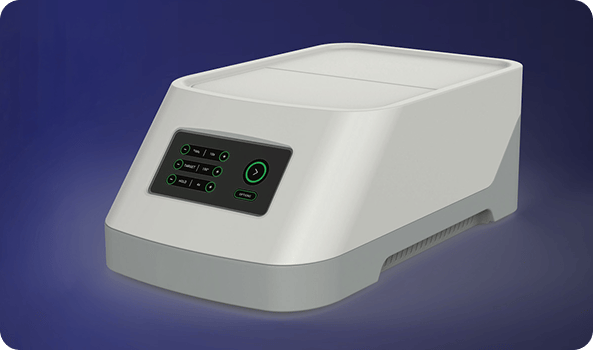 This shift proved transformative. The new platform resolved memory concerns, enabled smoother real-time performance, and unlocked the ability to design custom UI components that were previously impractical. Elements such as rounded, animated progress indicators — once aspirational — became defining features of the interface, reinforcing clarity, trust and ease of use for operators.
THE RESULT
Technical Excellence as a Competitive Advantage
The improved responsiveness and visual clarity elevated the entire system, helping users immediately understand and trust the technology they were operating. Through careful platform selection, expert implementation and forward-looking guidance, the interface evolved from a basic requirement into a strategic asset.